
Tampa Chapter
November 2017
Contents
Meeting
announcements
Revolution
History note
Program
Schedule
Dues
are Due
Wreaths Across America
Other
Dates of Interest
Misc. reminders and information
Meeting Announcements
The next meeting of the
Tampa Chapter, Sons of the American Revolution, will held on Saturday, Nov. 18
at the Golden Corral in Temple Terrace.
The new venue is working out fine.
As always, members will start gathering at 11:30, the formal meeting
will start at 12:00 with a break for lunch.
Please remember to pay on your way in and keep your receipt for the
waitress. This month is Law Enforcement,
Fire Fighter and EMT recognition.
The street address for the
Golden Corral is:
11801 N 56th St
Tampa, FL
33617
(813) 899-1833
October
The
October meeting of the Tampa Chapter, Sons of the American Revolution, was
held at the Golden Corral in Temple Terrace. Compatriot Bob Yarnell presented
a brief book review of Washington’s Immortals by Patrick
O’Donnell. President Charles Krug made
an excellent presentation on Cato: A Tragedy written in 1712 by
Joseph Addison.
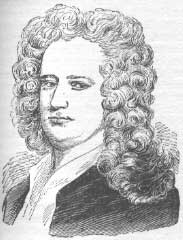

Joseph Addison
Compatriot
Dick Young and Chapter President Charles Krug presented SAR Heroism awards to Corporal
Wallick and Officer Thanasas of the City of Tampa Police Department for their
bravery in a life-threatening situation where they de-escalated the situation,
saved hostages, and prevented any injury or loss of life.

______________________________________________________________
Revolution
History Note:
This
is the second of a two-part series on how historical sites (battlefields and
homes, for example) speak to us. Last
month we looked at how the people involved, and the geography of the place
informs us about what happened there. This month we’ll look at the archaeology
of the place. What artifacts have been
found and what do they tell us? How has the location changed since the events
took place or since the “historic” people lived there? Both can impact our
under-standing of the place or event.
Archaeology
Why is the archaeology of a place important? Bullets found
on a battlefield can help pinpoint the locations of firing positions and
locations being fired into. Shards of
pottery, pieces of glass, even discarded toys can tell us much about a house
and who lived there. They can also help
us decipher what the people ate and what they grew or manufactured.
The
Battle of the Little Big Horn is an excellent example of how archaeology can
help us understand a battle. Several
years ago, following a wild fire that swept the battlefield, the park service
allowed archaeologists to do digs. Since
they knew what weapons the Cavalry had it was easy to determine from shell
casings where they were positioned and from spent bullets the positions they
were firing into. Any other shell
casings and bullets found could be assumed to be in possession of the Sioux and
Cheyenne and their positions could be more accurately located. This resulted in some (necessary) re-writing
of the more familiar account of that battle.
Since very few battlefields from the War for Independence have been
preserved and, on those that have, very little in the way of systematic
archaeological surveys have been done, this is less helpful for students of
that war. Likewise, most civil war
battlefields prohibit archaeological digs.
Archaeology
is more important when researching locations of homes and settlements. Much of what has been restored at Colonial
Williamsburg has been based on archaeology.
Everything they find, from original building foundations to something as
simple and mundane as a garbage pit, has been used to make the site as accurate
as possible. In nearby Jamestown, some
important artifacts were unearthed a few years ago---toys. There is nothing in most of the written
documents about there being children in Jamestown and what little is known is
more implied than directly stated. But,
then, some toy soldiers, a doll, a carved small wooden horse, and a small
leather shoe were found. They provided
the proof that children ran and played in Jamestown.
From
bullets on a battlefield to the contents of a garbage pit, archaeology helps us
understand and interpret the past.
What has happened to the
ground since?
This presents the biggest problem and challenge to people
visiting battlefields and historic sites.
In the case of Cowpens, we are fortunate that the land was in the hands
of the same family and only used for light farming (most of that behind the
main battle lines) and grazing. Thus, it
has come down to us very much as it was in January of 1781 when the battle
occurred.
Antietam and the Little Big
Horn, likewise, have come to us in relatively pristine condition. But many of the most visited sites have
not. The best example would be
Gettysburg. A visitor to the Gettysburg
battlefield today cannot get a clear picture of the engagement unless they have
done some homework and have learned of the changes to the battlefield—both in
the lay of land (undulations in the ground that have since disappeared) and the
locations of areas of woods-some of which were there at the battle and most of
which were not.
Most of the battlefields from the War for Independence have
disappeared. It is impossible to stand
in modern Brooklyn and try to imagine the battle lines and undulations of the
ground where the Maryland Line formed Washington’s rear guard or to appreciate
the location of woods that helped break up British advances at Monmouth. Or closer to home, the Dade battle site, now
preserved, was used as a camping ground for tin can tourists in the 1920’s and
30’s and most of the vegetation was removed. Most of the re-growth does not fit
with the few eye witness accounts we have.
We often limit our knowledge of historical sites to the
written record. But each of the four
topics we have mentioned these past two months is necessary to get a clear
picture of what happened and why.
History by its nature can be considered “exact imagining.” The written record, geography, archaeological
finds, and knowledge of what has happened at the site since give us the best
picture we can get. That is the exact
part. It is then up to us to use our
imagination to put all that information together in our minds to get as good a
picture as we can of what happened.
To ponder and dream, to realize while forms change,
spirits linger and on great fields something abides, something for us to
imagine and from which we learn. *
*Paraphrased (with additions) from Joshua Chamberlain.
_________________________________________________________
Program Schedule
Nov 18 Law Enforcement &
Fire Fighter Commendation and Recognition
Dec 17 Brief business meeting
after Wreaths across America ceremony —
(site to be determined)
Tentative—Christmas social get-together
Jan. Officer Installation -
site to be determined
Feb/March—Tentative hopes for
a joint meeting with the DAR, maybe a speaker on
genealogy, possibly a presentation on the SAR
Youth Protection Training
April JROTC Recognition
May perhaps Sept speaker re-scheduled; perhaps local museum speaker; perhaps Rodney Kite-Powell of the Tampa Bay History
Center
__________________________________________________________
Dues Are Due
By
now, everyone should have received a dues renewal notice from Membership
Secretary Jason Krajnyak. Please bring a
check to this meeting or put check in mail to address in Due's Notice as soon
as you can. Many thanks for your prompt
attention to this matter.
If
you are an SAR Life Member, you pay only State and Chapter Dues
If
you are active duty military, you pay only National Dues
If
you are a Junior Member, your dues are paid by the Tampa Chapter
______________________________________________________________
Wreaths Across
America
For the fourth year, the Tampa Chapter will sponsor the American Legion
Post #5 Veterans Cemetery Wreaths Across America Ceremony. The Ceremony will be held at Noon on December
16. Information on the nationwide WAA
Program can be found on their website at www.wreathsacrossamerica.org. Donations can be made on their website or the
American Legion Post website at www.post5tampa.org or using the attached form. Everyone is encouraged to attend and
participate in the Ceremony. Our Chapter Color Guard will be there in
uniform.
______________________________________________________________
Other Dates of
Interest
December 16 Wreaths
Across America Ceremony
February 4 Florida Winter BOM &
Oration Competition (Kissimmee)
March 10 Commemoration of Last Naval Battle
(Merritt Island)
April 7 Commemoration of Battle of Thomas
Creek (Jacksonville)
May 18-20 Florida Spring BOM &
Annual Meeting (Kissimmee)
July 13-18 National Congress (Houston)
_________________________________________________________
Misc. Notes and reminders:
Chapter
Website—remember you can find information about the chapter and programs on the
chapter website. http://www.tampasar.org/
One
of the duties of the Chapter Chaplain John Sessums is to send cards to our
members that are sick. Another is to send a sympathy card to the family of a
member who has passed away. If you know of anyone that should be the recipient
of these cards please mention it to the Chaplain or one of the other officers
at our next meeting.
Chapter
officers and committee chairman are encouraged to send any pertinent
information they wish included in the newsletter to the Newsletter Editor Bob
Yarnell at rsyarn@aol.com.